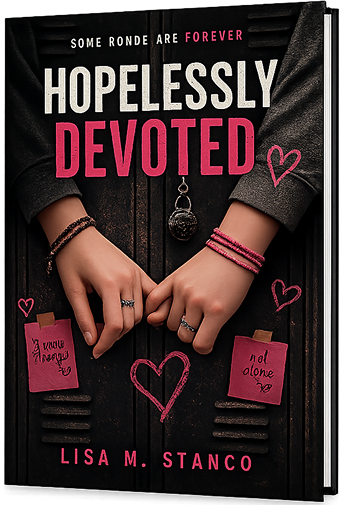

People ask how I write teenagers who sound like teenagers. The answer is boring: I've been outnumbered by them since the nineties, and they correct me.
Here's the first thing they taught me. Teenagers are funnier than adults are willing to admit. Not cute- funny. Actually funny — fast, dark, brutally well-observed. A kid who's bombing a quiz can still land a joke about it that I'll be thinking about at dinner. When adults write teenagers as earnest little bundles of feelings, I know immediately that they haven't been in a room with one recently. My students are running comedy bits at each other at a speed I can't keep up with, and the jokes are load-bearing. That's the mask. That's how it gets built.
Second thing: they can smell a fake line from across the room. You cannot write down to them. The instant a character says something no seventeen-year-old would say — some tidy little lesson, some speech about believing in yourself — they're out. They won't argue with you about it. They'll just quietly decide the book isn't for them, and you'll never get them back. So when I wrote Mary, I let her be petty. I let her plan revenge. I let her be wrong for pages at a time, because that's true, and true is the only currency you have with this audience.
Third thing, and this is the one that took me longest. What looks like drama to us is not drama to them. It's scale. When a seventeen-year-old loses the part she's wanted since fourth grade, the correct emotional response is devastation, because in the world she currently occupies, that is the whole world. The mistake writers make is winking at the reader over the character's head — isn't this cute, she thinks this matters. No. It matters. If you don't believe it matters, don't write the book.
Fourth: they are braver than they know, and nobody tells them. The kid who auditions for a musical having never sung in front of anyone. The kid who eats lunch alone rather than sit with people who make her feel small. The kid who says the true thing out loud in a room that doesn't want to hear it. I've watched all three this year. Adults call it a phase. It's not a phase. It's the bravest most of us will ever be, and we spend the rest of our lives trying to get back to it.
The last thing they taught me is the reason I write at all. They're paying attention to whether you meant it. Every one of them, all the time, with a precision that would frighten you. They know which teachers are performing and which ones are present. They know when the pep talk is real. They clock the adult who says my door is always open and the one who actually looks up when someone walks through it.
Thirty years of that will teach you how to write a scene. It'll also teach you how to be a person, which I'm still working on. Pieces of all of them live in these characters. That's not a dedication line. It's a confession.